
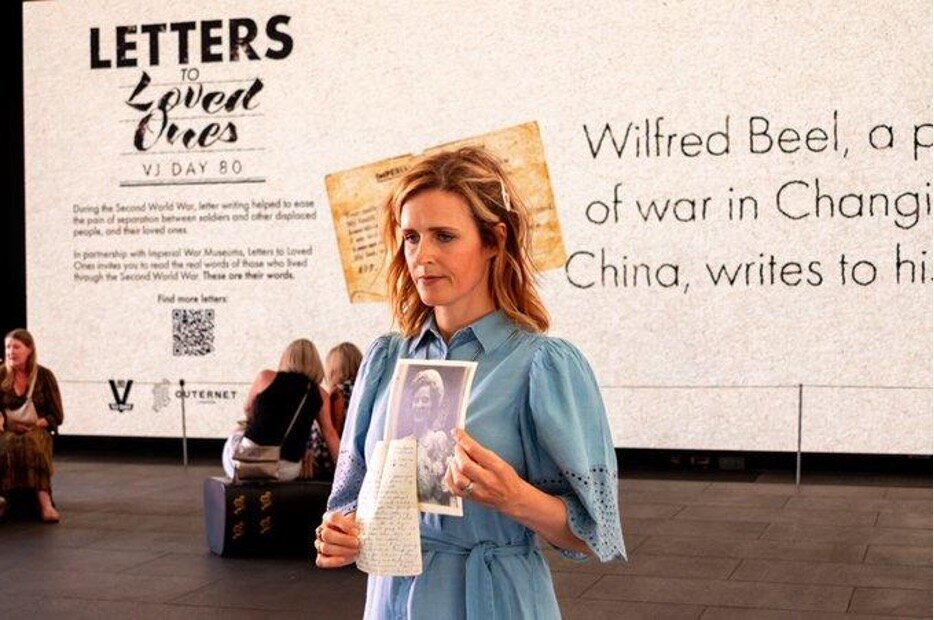
Letters to Loved Ones grew out of a larger VE & VJ Day 80 commemoration website I built for the Department for Digital, Culture, Media & Sport in 2025. The idea was to invite families to share letters written by their parents and grandparents during the Second World War, and publish them online so they could be read and appreciated by a wider audience.
I built and managed the platform: WordPress, with a media upload form handling scans and photos alongside contributor details and context about their loved one’s role in the war. Longer letters arrived by email too – extra pages, newspaper cuttings, wedding photographs, contemporary artwork.
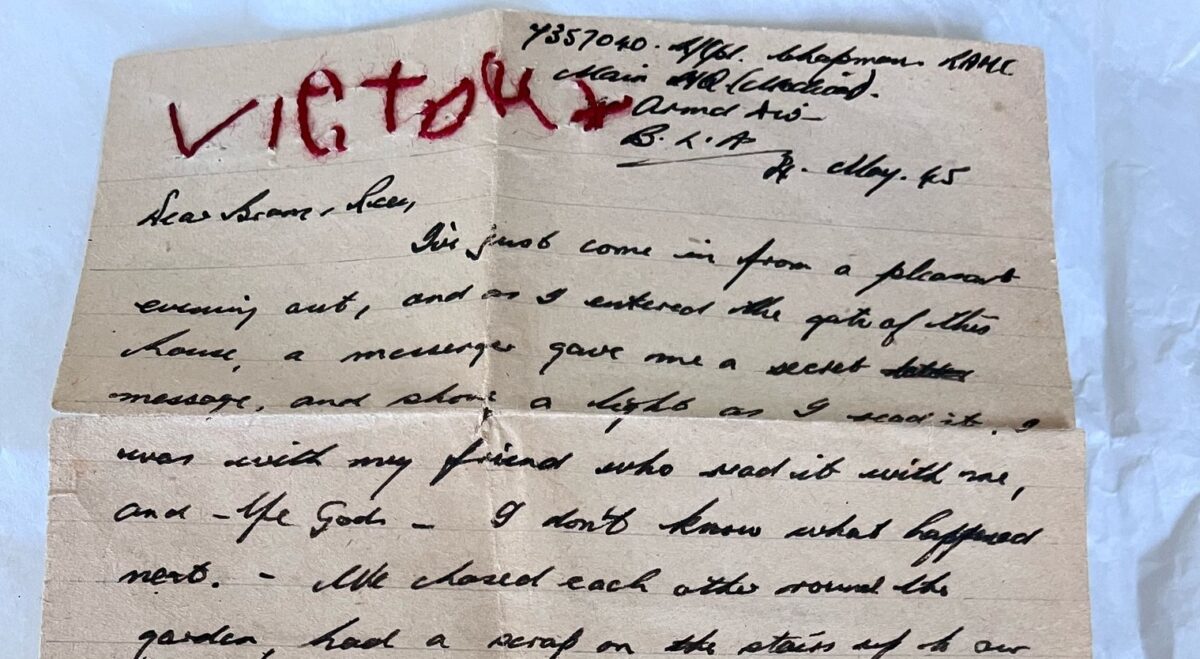
Handling the incoming contributions and liaising directly with the contributors turned the project into something far more compelling than I’d anticipated and one of the most heartwarming projects I’ve worked on.
These weren’t routine user-generated content submissions to check for missing fields. They were bona fide historical artefacts – accounts of survival, final letters, quiet words of consolation, and matter-of-fact notes from ordinary young people suddenly transported to strange places. Some had never been read outside the family before.
“I shared the link with my mum who is really pleased to see the Letters to Loved Ones project, and proud her father’s letters are given some attention.” – contributor to Letters to Loved Ones
Over 450 letters were submitted. When the main commemoration site closed at the end of 2025, I worked with two Pentri associates to migrate the full collection of letters to its own site. That meant transcribing every letter from its images, applying structured WordPress taxonomies by theme, location and keywords, and carefully redacting any personal data – home addresses and other details that warranted discretion even 80 years on. The result is a fully searchable archive, with full-text search across transcriptions and metadata – names, places, military units – alongside structured browsing for visitors who want to explore by subject or geography.
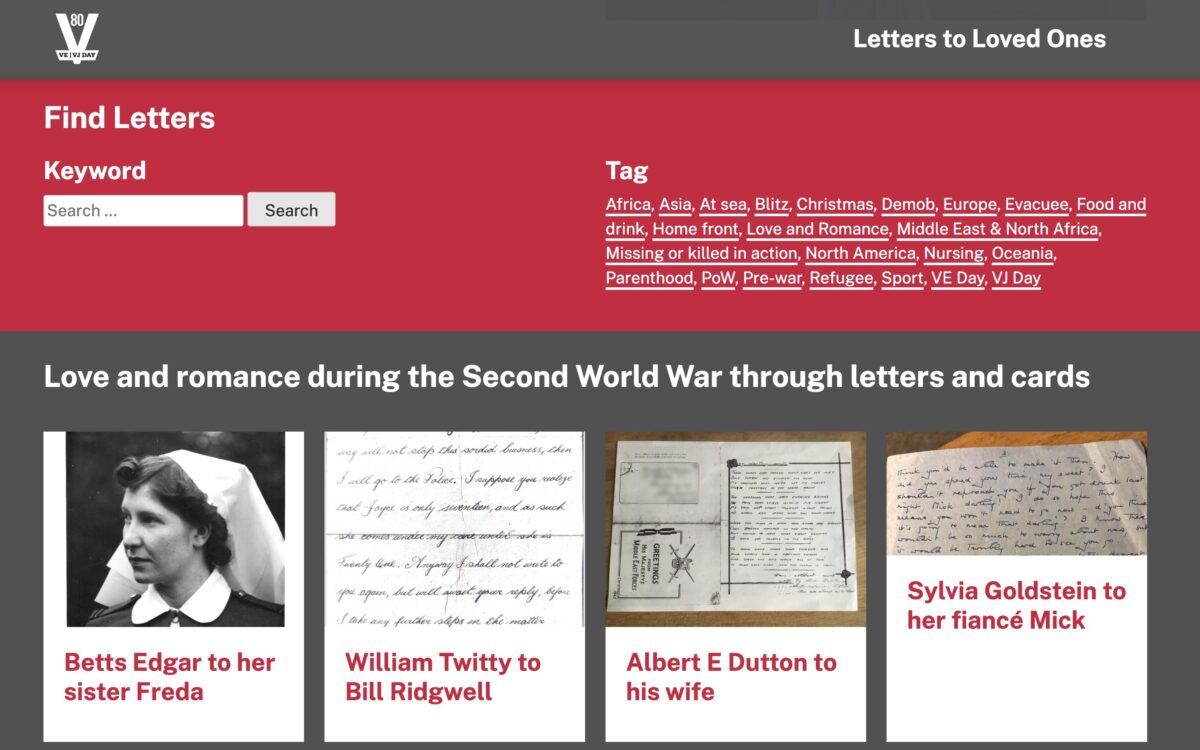
The site remains live and functional, maintained as a fixed record of a particular moment of remembrance, while the generation with first-hand memories of the Second World War is still with us to share it.